
Book One
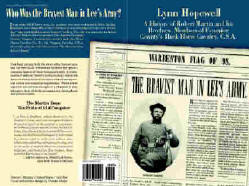
The Bravest Man in Lee's Army
Manuscript in preparation at time of author's passing
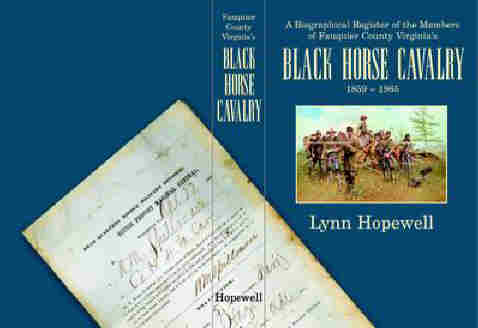
I have been researching Fauquier County's Black Horse Cavalry — Company H, Fourth Virginia Cavalry, C.S.A. — for many years. The objective of the work is a comprehensive history of this famous Confederate Cavalry company. My focus is not just on the military history of the unit. Frankly, I find the individual cavalrymen and their families just as interesting.
After researching over 220 members of the company, I became very aware that the men came from the best families and that there was a high degree of social and kinship interaction between them. The members of the company knew each other and each other's families.
One family stood out in my studies — the Martins. "Honest" John Martin and his wife Susan Fisher Martin had three sons in the Black Horse and two of their daughters married Black Horse Cavalrymen. Their oldest son Bob was the subject of a remarkable event: he was selected as the "bravest man in Lee's army" and awarded a rifle sent by an Englishman for that purpose.
This was an extraordinary honor, and yet at the beginning of the 21st century, Bob Martin and his family are all but forgotten. No descendant with the name Martin remains. The graves of the family are overgrown and ignored in a country cemetery.
He appeared to court danger for itself, and it seemed there was nothing he so little valued as life. To him, by general consent, therefore, the rifle was awarded as "the bravest of the brave." — John Scott, first Captain of the Black Horse Cavalry
The Martin Brothers
Bob Martin
First Sergeant
"He appeared to court danger for itself, and it seemed there was nothing he so little valued as life."
— John Scott, first Captain
Dick Martin
Private
"…was second to none in the Black Horse for courage and nerve. It was he who had the proud distinction of being chosen by Jackson at Harper's Ferry."
— Alexander Hunter, Black Horse Cavalryman
Josh Martin
Private
"I have seen him in the advance dismounted, his eyes blazing with the flame of battle… and I have seen him stop, and with a pitying tenderness give his canteen to a wounded enemy."
— Alexander Hunter