Company H · 4th Virginia Cavalry · Black Horse
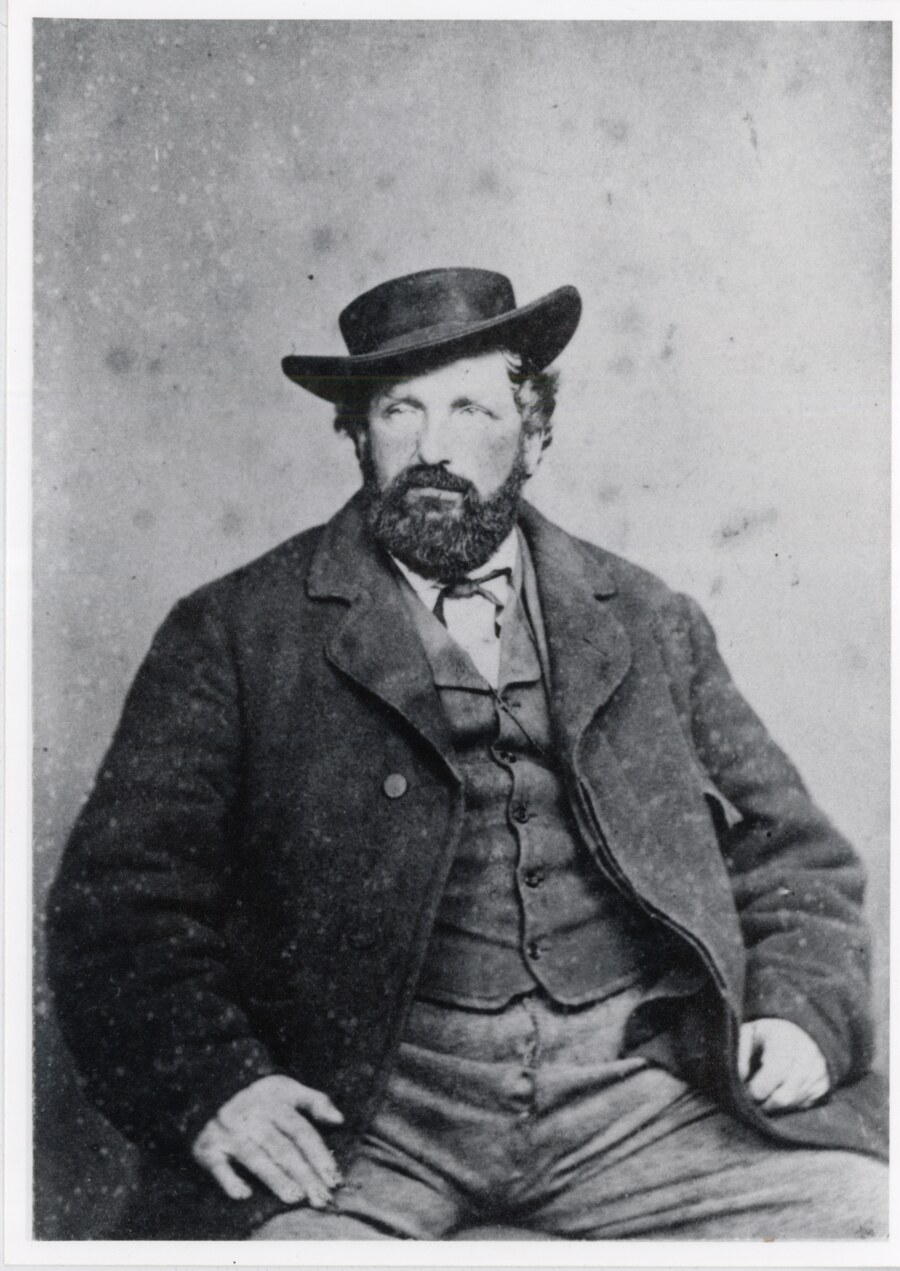
Walker Reid Millan
1824–1891
Confederate Service Record
"Walker Reid Millon"; 5’11"; light complexion, grey hair, blue eyes; enlisted 1 August 1863; Sgt.; paroled 6 May 1865 Winchester.
This entry contains unresolved editorial notes from the working manuscript,
marked as [NOTE: ...].
These are Lynn Hopewell's or Susan Roberts' open research questions, preserved exactly as written.
Walker Reid Millan M V K Y Photo: Russ Hunley says he will send photo.[2795] Have photo from RH. Born: 1824,[2796] in Virginia,[2797] “I think at Alexandria.”[2798] Married: Columbia Anna Cooper ( –1917).[2799] “His wife, Columbia Cooper Millan, came from the Culpeper, VA area.” She is “buried in the Fairfax City Cemetery”.[2800] Died: 1891,[2801] in Virginia.[2802] spelled “Millan”; possibly buried at Fairfax Cem., Fairfax City.[2803] “I think he died at Fairfax.” Buried near the Confederate monument, with a Confederate marker.[2804] “Both are buried in the Fairfax City Cemetery and Walker’s grave has a U.D.C. marker.”[2805] Obituary: A short obituary said he was a “distinguished member of the community.” His descendant found this obituary at the Fairfax library, possibly in the Fairfax Herald. [2806] [**Find.] Children: “There were six children.” Lilian Washington, Mary Cooper, Edmonia Virginia, Bessie, John Leroy, and William Walter. Lilian, Mary and Edmonia never married. Bessie wed J. P. H. Mason. John wed Emaretta Collins. William married.[2807] **Dates of birth, death, spouses’ names. “The Misses Millan were Edmonia Virginia Millan, Mary Cooper Millan, Bessie Byron Millan and Lilian Washington Millan.”[2808] Parents and Siblings: Elizabeth (Sheid?) and Colonel John Millan. He died 1858. She was still alive at the beginning of the war. Both were buried at “Oakley”, Fairfax County, and were later moved to the Fairfax City Cemetery. **dates of birth and death. Places of birth and death. Marriage date and place. Confirmation of her maiden name. He had one sibling, a brother.[2809] “Lyle Millan, a doctor, is said to have in Culpeper, VA. Prior to the Civil War he served in the Virginia Militia, but no evidence has been found that he saw active service during the war.”[2810] Other Family: John Gott: Prominent Fairfax County family.# Walker’s paternal grandfather, Thomas Millan, was a Revolutionary War veteran. He had been an ensign in Captain Cleveland’s company, the Loudoun County Militia. Walker’s father was a captain in Minor’s Regiment, the 60th Regiment of the Virginia Militia, in the War of 1812. He participated in the 1814 campaign (the same one during which Francis Scott Key composed “The Star- Spangled Banner”). John Millan later became a colonel and commanded the regiment. Walker’s daughters, Lillian, Mary and Edmonia, lived at the Millan family plantation. Lillian was a “well-known schoolteacher mentioned in the county history.” His son, William, became a lawyer and was at one time president of the D. C. Bar Association. Naval Admiral Horace Epps decended from him. His daughter, Bessie, and her husband are buried at Pohick Church. His son, John, lived at his wife’s family’s plantation, “Pleasant View”, which was later taken by eminent domain for Interstate 66.[2811] Stories, Letters & Biographies: “Capt. John Quincy Mar … and his company… were the guests of Mrs. Millan and her son [Walker Ried Millan], who lived in Alexandria… .” [2812] See Stories Chapter. “They gave their all for Southland/ And counted not the cost.”[2813] See Biographies Chapter. CSR: “Walker Reid Millon”; 5’11”; light complexion, grey hair, blue eyes; enlisted 1 August 1863; Sgt.; paroled 6 May 1865 Winchester. Additional Information: W. R. Mellon[2814] Listed as “W. R. Millan.”[2815] Millan[2816] [NOTE:check whether one or two Millans listed by this article.] “Walker Reid Millan … lived in Alexandria, VA before the war.” “Walker Reid Millan served in Company H, 4th Virginia Cavalry, also known as “The Black Horse Troop.” While he enlisted as a private in August 1863, some sources state he later attained the rank of sergeant. Like many of the Confederate cavalrymen, after Appomattox Millan never surrendered; he simply returned home. He signed the oath of allegiance in Culpeper on May 6, 1865 and was paroled.” “They [Walker and his wife] lived at Oakley after the war.”[2817] “He was Sheriff of Fairfax.” “He was a businessman.” He left business sometime before the war began, returning to the family plantation, “Oakley”, to assist his mother, Elizabeth, with its management. This plantation was located on West Ox Road in Fairfax County. When war broke out, the family went to live with his brother, a doctor in Rappahannock. They returned after the war. “Oakley” was owned and operated by the family for 150 years, from 1810 until the early 1960s. It and another plantation, “Fruit Vale”, were the site of the Battle of Chantilly. “Fruit Vale” belonged to the Ried family. “Oakley” was used as a hospital during the war. His daughter, Lilian, was the last family member to live at the home. When she died in 1958, the property was divided among the remaining descendants and the house was torn down.[2818]
This entry contains 24 footnote references. The full bibliography is in the References section.
Walker Reid Millan.
Source Rosters
- M Martin Roll (most authoritative)
- V Vanished Roster (~1874–1878)
- K K.I. Keith Roster (1924)
- Y Nanzig Register
Descendant or researcher? Corrections and additions welcome.
Suggest a correction →From A Biographical Register of the Members of Fauquier County Virginia's Black Horse Cavalry, 1859–1865. Compiled by Lynn C. Hopewell (1940–2006), with editorial assistance by Susan W. Roberts and research by Heidi Burke. Manuscript completed February 28, 2008. Published posthumously.