Introduction A Fauquier County Family
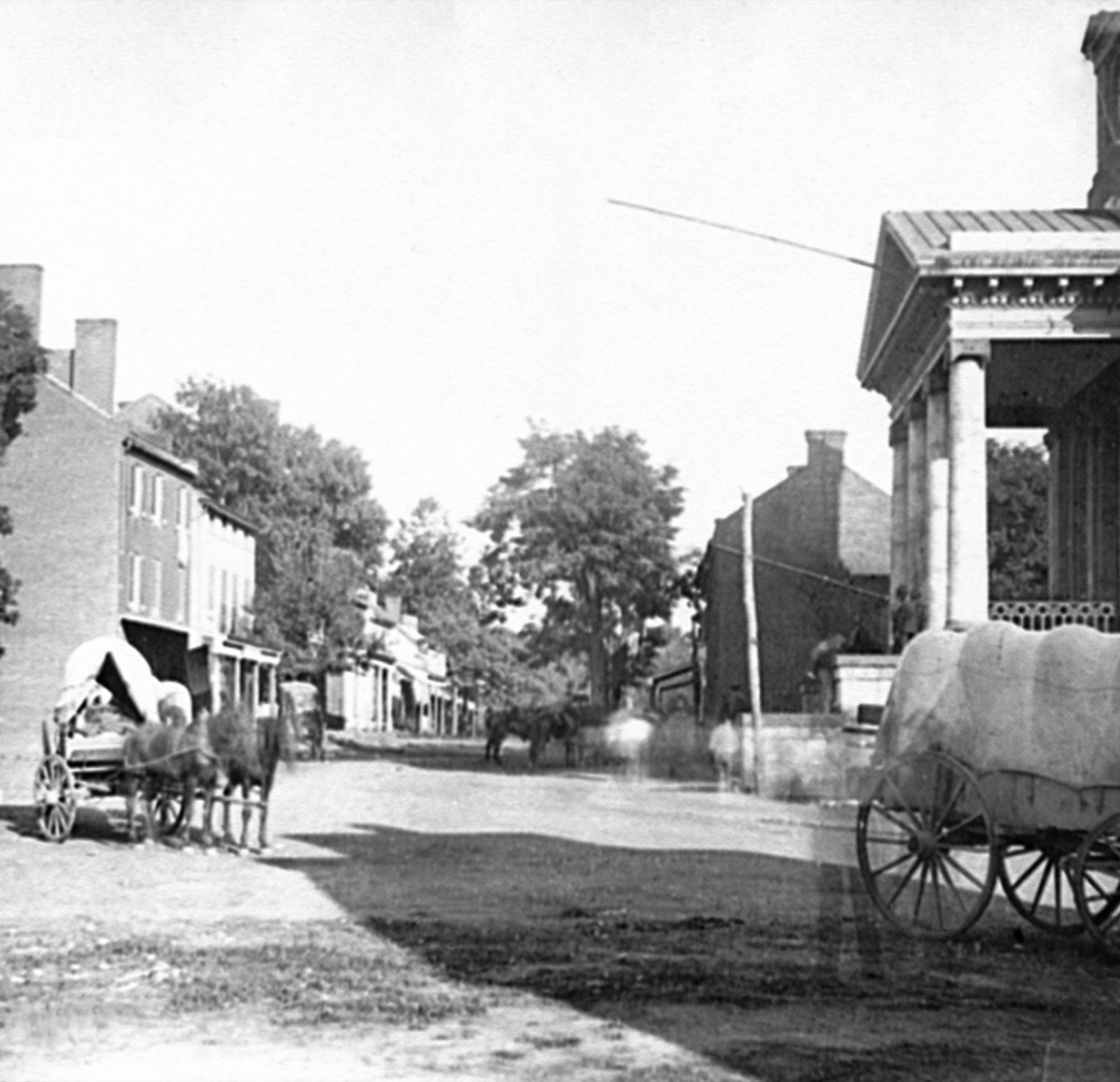
In the last half of the nineteenth century, the War Between the States dramatically shaped the history and social milieu of Fauquier County, Virginia. Almost every able bodied male in Fauquier—thousands of men—served in the Confederate army. Hundreds died, and many more were wounded. The armies of both sides spent many months in the county and economically devastated it. The impact on Fauquier families was profound.
Add more about county
This is the story of one of those families, and their three sons; the “Bravest Man in Lee’s Army—Robert Edward Martin, and his brothers Dick and Josh. According to the inscription on Josh’s tombstone, they were—“The Martin Boys the Pride of Old Fauquier.” These sons of “Honest” John Martin and Susan Fisher became local heroes because of their bravery and adventures in Fauquier’s famous Black Horse Cavalry.[1] [2] [3] [4] [5]
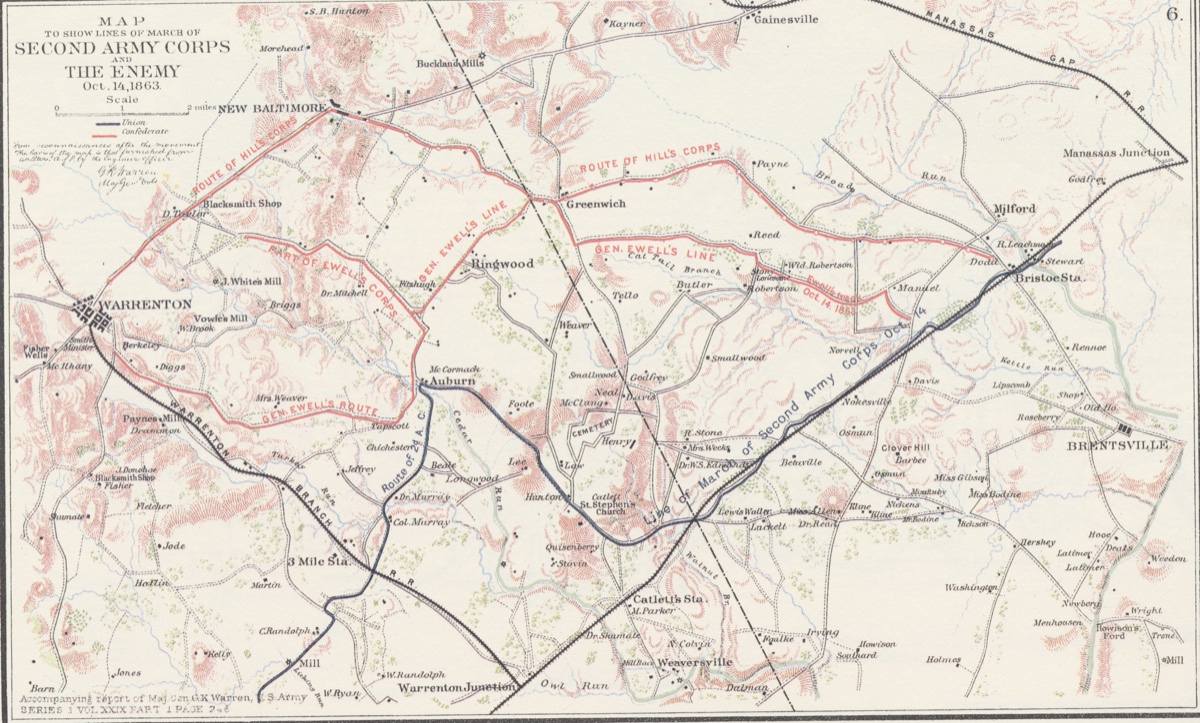
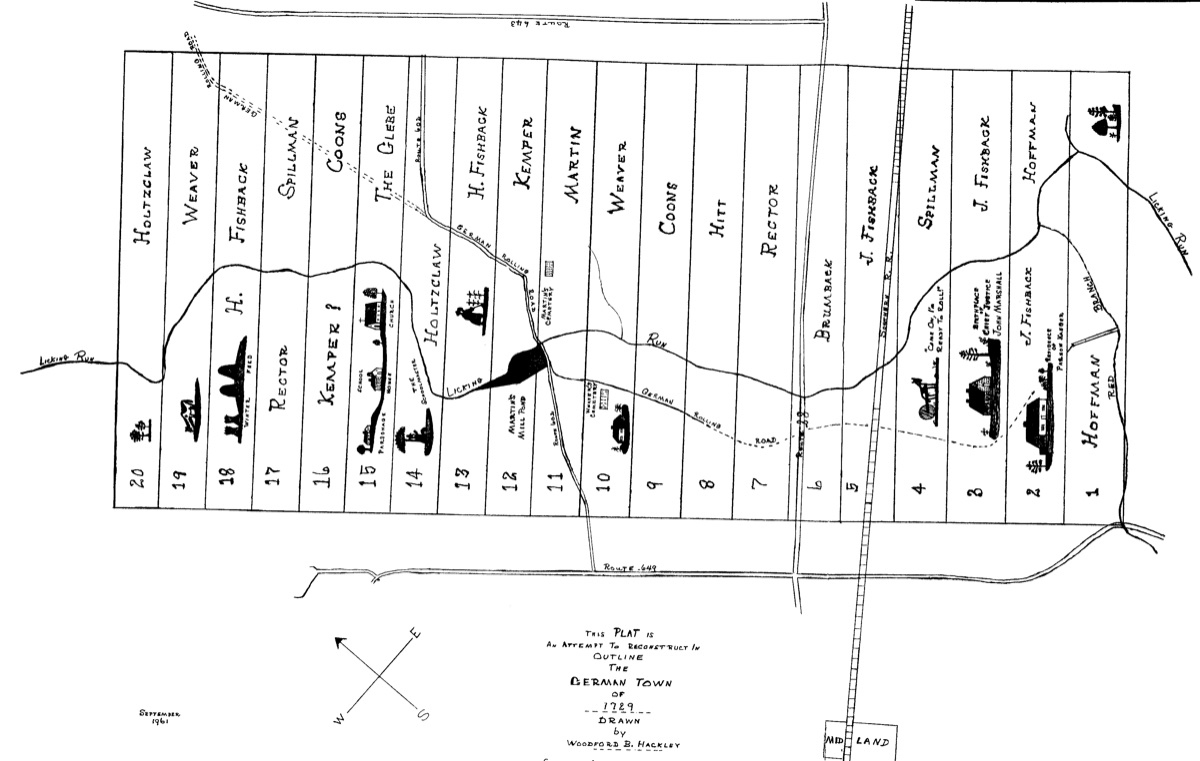
The Martins were a prominent nineteenth century Fauquier County, Virginia family, descendents of German immigrants who settled Fauquier’s noted Germantown community. John, Susan and their children lived on a 405 acre farm on the west side of Meetze Road, astride Beach Road,[6] about five and a half miles southeast of Warrenton.
The central stories are of Robert Martin and the circumstances surrounding the award of the rifle to him as the “Bravest Man in Lee’s Army;” and of the exploits of his brothers Dick and Josh.
In other chapters we will look at the arrival of Martins in Fauquier, with the main focus on Elias Martin, grandfather of the Martin boys and his forebears. Then we will look at the family of Honest John and their children in detail; as well as their families allied by marriage.
But, first we give an overview of the Martin brothers and the Black Horse Cavalry. Who were these young men? What were their daring deeds? Then we ask what was their familytheir family was like? Who were their kin? The tale is scattered among books, articles, magazines, photo albums, cemeteries, manuscripts, letters, interviews and court records in a number of states.
When it is all pulled together, the picture emerges of a family with everything to lose who gave their all to their community during turbulent times.
The Brothers
Bob, Dick and Josh Martin fought from the beginning of the war to the end with the Black Horse and all were involved in noted exploits. Each of the brothers gave distinguished service and were lauded by their comrades.
Bob Martin won a rifle for being the “bravest man in Lee’s Army.”[7]
Dick Martin was known for his skill and daring as a courier and scout.
Josh Martin was involved in a famous incident, in which Lt. John Meigs, an engineer on General Philip Sheridan’s staff, and son of Union General Montgomery Meigs, was killed.
One of their comrades-in-arms described the three brothers: [8]
The Martins… are truly a fighting family. …He [John Martin] had three sons, Robert, Richard and Josh. All three joined the Black Horse Cavalry, and no stauncher warriors every sat at the round table of Morte d’Artur or followed Richard Coer de Leon to the Holy Land. Living in the heart of Mosby’s Confederacy, being familiar with every inch of ground, knowing every hog path and cattle trail in that famous debatable ground, they passed four years as scouts within the enemy lines. Their exploits read like a romance, and their deeds were so full of deadly daring as to almost defy belief. Riding like Marmadukes[9], deadly shots, with utter fearlessness and unshaken nerve they would raid and foray among the small detachments of the enemy, until their names became a terror and a household word among Stoneman’s[10] cavalrymen… These three Martins during the war did not kill, capture or place hors de combat less than a hundred of the enemy. Robert captured ten at one time alone and unaided. They were new levies and Dutchmen at that, and were playing cards in the woods a short distance from the camp. The three Martins, at another time, captured some twenty Federals who had slipped away from camp to forage among the farmers. I believe the record of damage reflected upon the enemy, from one family, is unequalled; and to old Mr. Martin, were he alive, should be given the palm of having a family of sons whose deeds were unsurpassed by any in the history of the great war, and who, as a family, inflicted more damage upon the enemy, by their individual bravery that history gives an account of.
Another described them thus: [11]
…a Trio of Brothers, whose devotion to the Southern Cause, and true courage as Soldiers, if equaled, could not be excelled, as was attested by the confidence reposed in them by their officers, the admiration and esteem of their comrades, and the dread and respect of their armed foes, for it could be truly said of them, that where duty called they were prompt to obey, and in the midst of conflict where the steel flashed brightest, and the bullets flew thickest, there were the Martin boys to be found.
We will tell the tale of each of the brothers in some detail. However, their supportive family also did their part. During the war, the Martin home was a rendezvous for meetings of members of the Black Horse and became a well-known landmark. The brothers became legends in Fauquier.
Fauquier County Prepares for War
Fauquier County had a rich heritage of distinguished political figures and public servants. With the increasing sectional animosity of the 1850s—fueled by years of political and social strife—Fauquier had become a hotbed of political discussion and activity.
Robert Eden Scott, the region’s Representative in the U. S. Congress was from Fauquier. The Fauquier Bar had become a forum of disunionist sentiment. From it would come the organizers of the Black Horse. The company was thus lead by attorneys with strong family and social ties. In national political developments by the late 1850s, the Northern and Southern sections of the U.S. had evolved into two distinct regions, even civilizations. The compromises of many decades that had maintained political balance and tentative union had lost their force.
Tariffs, national banking and internal improvements were examples of issues on which the South had been willing to compromise to maintain the integrity of the constitutional union of sovereign states. However, the growing industrialization of the North, compounded by increasing numbers of immigrants contrasted with a stable Southern society based upon agriculture, had driven the sections apart.
The differences, were exacerbated by Northern abolitionists, and arising from the pantheistic Transcendentalist movement of New England, who unleashed a relentless attack upon not only the “peculiar institution” of slavery, but upon all things Southern.
Proposing “solutions” to problems with which they in the North did not have to deal, the abolitionists provided the catalyst that forced the South to define itself as the sole heir—and defender—of the original U.S. Constitution. Southern patience began to wear thin of Northern ridicule. The sentiment for secession—long threatened throughout the South and earlier raised over other issues by Northern states such as Massachusetts, and even New York City—became widespread. While hoping to avoid it, Southern communities began to prepare for the coming conflict.
The Black Horse Cavalry
Several dozen Confederate military units were formed in Fauquier. The most noted was a cavalry unit, the Black Horse Company. According to John Scott, the members of the Black Horse were “all young gentlemen of the first respectability, and were either themselves planters or sons of planters. The rank and file was composed of young men of the same social material with the officers.”
If not related by blood, all men in the Black Horse were friends and neighbors. The fabric of their lives was woven into an organic relationship with their community. The defense of their community against invasion from the North and defense of the Constitutional principles inherited from their Revolutionary fathers was their first thought and their essential devotion.
The Black Horse Cavalry began as a militia unit, in anticipation of the coming conflict. “… [The Black Horse was] set in line by U. S. Army Captain D. H. Jones, afterward a Confederate general, at Waterloo, on the Rappahannock river, on the 18th of June, 1859.”[12] “The young men who formed this company were, as a rule, the sons of planters who would inherit land and follow the occupation of their forefathers.”[13] [14]
The Black Horse were mostbecame prominent before the war when they were detailed to serve as prison guards for the John Brown trial in Harper’s Ferry in November, 1859. After they returned home from that duty, the ladies of Fauquier entertained them at a ball at the Warren Green Hotel.[15] When Virginia seceded from the Union, the company was then called into regular service.
“The Company constituted a part of the force of Virginia Volunteers and were called into the service of the State by the Governor under an ordinance of the State Convention adopted April 17, 1861, and were to serve for the term of one year from April 25, 1861 unless sooner discharged. The Company was enrolled for active service by Lt. [Robert] Randolph on May 7, 1861, at Warrenton and was mustered into service by Col. Eppa Hunton.”[16]
OverAbout 200 300 men served with the company during the war, almost all of them from Fauquier. Thirty-five died in service and more were wounded.[17][18]
Their Early Fame
The Black Horse Cavalry was arguably the most famous Confederate cavalry unit. They obtained their fame not because they were “better” than other units, but because the vagaries of war brought them into the limelight.
They got some highly visible publicity when they helped precipitate the Union rout and retreat over Cub Run Bridge at the battle of First Manassas (1861). The Northern newspapers told of the “terrible Black Horse” who boldly charged and routed the Union troops. According to the Richmond Daily Inquirer, quoting the Baltimore Exchange:
MORE ABOUT THE TERRIBLE BLACK HORSE. Alexandria, July 25, 1861. I overheard one of the men sitting on the door step of the house describing the charge of the Black Horse Cavalry, part of which, I believe, is Capt. Scott’s Fauquier cavalry. He said they advanced in a wedge form, then opened, disclosing a battery which fired upon his regiment, and that then the cavalry charged upon the regiment, hemming it in on all sides; and, cutting right and left with tremendous blows, each blow powerful enough to take off a man’s head. He said he never wished to see such a charge again.[19]
They continued to have high visibility because much of the time the enemy forces were based in or near Fauquier County and the Black Horse, being so familiar with the area, were detailed as scouts and for intelligence missions. General Robert E. Lee came to rely on them and complimented the Black Horse:
The general commanding announces to the army the series of successes of the cavalry…during the winter months, in spite of the obstacles of almost impassable roads, limited forage, swollen streams and inclement weather…Captain Randolph, of the Black Horse Cavalry, has made many bold reconnaissances in Fauquier, taking more than 200 prisoners and several hundred stand of arms … R. E. LEE, General.[20]
Their reputation also advanced because of their fortuitous association with several general officers, most notably, Gen. Stonewall Jackson.
The Black Horse was assigned as scouts and bodyguards to Stonewall Jackson as he began his campaign against Pope that led to the battle of Second Manassas. On the way to Manassas, thirty men of the Black Horse, under Lt. Alexander Dixon Payne, turned back and guided Lee and Longstreet to Jackson. Several Black Horse Cavalrymen were killed in that battle. After Second Manassas, Lee undertook his Maryland campaign. The company was the sole cavalry with General Stonewall Jackson when he took Harpers Ferry on the way to Antetiam. Jackson specifically commended them in his battle report.
On September 5 [1862] my command crossed the Potomac at White’s Ford, and bivouacked that night near the Three Springs, in the State of Maryland. Not having any cavalry with me except the Black Horse, under Captain Randolph, I directed him, after crossing the Potomac, to take part of his company and scout to the right, in order to avoid a surprise-of the column from that direction. For the thorough and efficient manner in which this duty was discharged, and for the valuable service rendered generally while attached to my headquarters, I desire to make special mention of this company and its officers, Captain Randolph and Lieutenants Payne, Tyle[r] and Smith, who frequently transmitted orders in the absence of staff officers. T. J. JACKSON, Lieutenant-General.[21]
After the War
The bonds of attachment formed between the members of the Black Horse were evident all their lives. They met actively as a veterans group. Whenever a member died, the survivors attended the funeral en mass, and the company flag was always used to drape the coffin. Their bond to each other was unbreakable, and enduring and dominated their lives. For example, after a life of accomplishment to be envied by anyone, Virginia Supreme Court Chief Justice James Keith wrote in a forward to a little book of his speeches:
To the Black Horse Troop. In tender memory of the Dead with affectionate greetings to the living. My proudest thought is that I was one of them.[22]