Josh Martin and Sheridan’s Fury
[Send to John Heatwole for review.]
George Washington “Josh” Martin was the youngest of the Martin boys, and was named after his father’s brother. He was born 2 February 1844. He grew up on his family’s “home farm.” When the war began, he was only seventeen, not yet old enough to enlist, but he was anxious to do so. So, only a week after his eighteenth birthday, he joined the Black Horse. Alexander Hunter described him: [201]
Josh was…a born soldier. He was a blooded game-cock with the gaffles on, and though of sweet disposition and gentle manners, in action he was as dangerous as a ‘Sans Coulette[202] in an emute’ holding a barricade against the Municipal guard.
Josh never married and left little in the way of a post war record. What we know most about him was his involvement in an incident that lead to one of the most notorious Union atrocities of the entire conflict—the burning of homes within a three mile radius of Dayton, a village near Harrisonburg, Virginia.
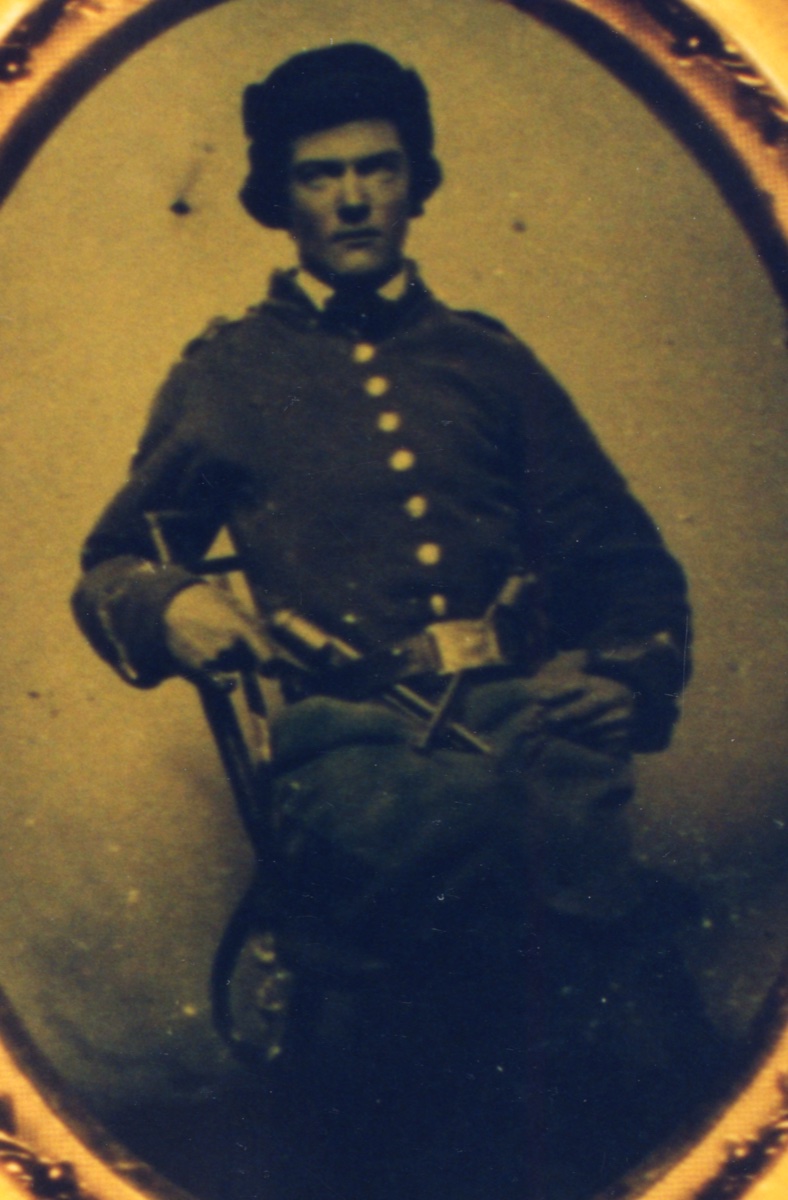
Jubal Early in the Valley -1864
In early 1864, Confederate territory was under siege by the Union armies with Sherman in Georgia and Grant at Petersburg, Virginia. In an attempt to compel Grant to dilute his forces, General Robert E. Lee sent Major Gen. Jubal Anderson Early’s corps to threaten Washington and clear the Shenandoah Valley. Gen. Carter Wickham’s cavalry brigade, which included the Black Horse company, was with him.
After several battles near Washington, creating considerable panic, Early moved to the Valley. There he won the battle of Kernstown on 24 July, defeating the army of Gen. George H. Crook. Grant dealt with the threat of Early by sending a large force under the command of Maj. General Phillip Sheridan to engage him. Overwhelming force was required because the presidential election was just a few months away. A Southern victory so close to Washington, D.C., might persuade voters to send President Abraham Lincoln home and give the South renewed hope for independence.
Several battles took place, with Early losing them. Then,[203]
Early’s army, bloodied by its defeat at Opequon (Third Winchester) on September 19, took up a strong defensive position at Fisher’s Hill, south of Strasburg. On September 21, the Union army advanced, driving back the skirmishers and capturing important high ground. On the 22nd, Crook’s Corps moved along North Mountain to outflank Early and attacked about 4 pm. The Confederate cavalry offered little resistance, and the startled infantry were unable to face the attacking force. The Confederate defense collapsed from west to east as Sheridan’s other corps joined in the assault. Early retreated to Rockfish Gap near Waynesboro, opening the Valley to a Union “scorched earth” invasion. Mills and barns from Staunton to Strasburg were burned in what became known as the “Burning” or “Red October.
Sheridan Burns the Valley
In October the Union declared total warfare on the civilians and non- combatants in Virginia’s Shenandoah Valley. Generals Ulysses Grant and Phillip Sheridan undertook the wholesale devastation of the valley, in violation of international rules of war and the army’s own regulations. Grant wrote to Sheridan in July, 1864:[204]
If the enemy has left Maryland, as I suppose he has, he should have upon his heels veterans, militiamen, men on horseback, and everything that can be got to follow to eat out Virginia clear and clean as far as they go, so that crows flying over it for the balance of this season will have to carry their provender with them.
In August, Grant gave further instructions to Sheridan:[205]
Carry off stock of all descriptions, and Negroes, so as to prevent further planting. If the war is to last another year, we want the Shenandoah Valley to remain a barren waste.
In October, after defeating Early in late September, Sheridan’s efforts were unhindered. He enthusiastically reported his progress to Grant:[206]
I have destroyed over 2,000 barns filled with wheat, hay, and farming implements; over seventy mills filled with flour and wheat; have driven in front of the army over 4,000 head of stock and have killed and issued to the troops not less than 3,000 sheep. Tomorrow I will continue the destruction of wheat, forage, &c., down to Fishers’ Hill. When this is completed, the Valley, from Winchester up to Staunton, ninety-two miles, will have but little in it for man or beast.
The rampage of plundering, pillaging, and burnings came to be known simply as “the Burning.” As one Union solder described the scene:[207]
The atmosphere from horizon to horizon, has been black with the smoke of a hundred conflagrations and at night a gleam brighter and more lurid than sunset has shot from every verge…The completeness of the devastation is awful. Hundreds of nearly starving people are going north.
A sergeant in Sheridan’s army, William T. Patterson, described the pillaging, plundering, and burning of Harrisonburg, Bridgewater, and Dayton Virginia:[208]
The work of destruction is commencing in the suburbs of the town. The whole country around is wrapped in flames, the heavens are aglow with the light thereof such mourning, such lamentations, such crying and pleading for mercy I never saw nor never want to see again, some were wild, crazy, mad, some cry for help while others throw their arms around Yankee soldiers necks and implore mercy. Another author noted:[209] At the time the Valley was populated only by women, children, and old men who were too feeble to be in the army. In letters home some of Sheridan’s soldiers described themselves as “barn burners” and “destroyers of homes.” One soldier wrote that he had personally burned more than 60 private homes to the ground, … After Sheridan’s work of destruction and theft was finished Lincoln grandly conveyed to him his personal thanks and “the thanks of a nation.”
The Deadly Scout
Although defeated by Sheridan, Early had not given up. In October, 1864, he was reinforced as expected by Rosser and Kershaw. Enraged at Sheridan’s scorched- earth tactics, Early planned to attack Sheridan, who was encamped around Harrisonburg and Dayton. “… He called a council of his lieutenants and it was decided to send two trusted scouts to Bridgewater to see if it was possible to obtain information of the expected move of Sheridan, and also to locate his position.”[210] Two Black Horse cavalrymen, Josh Martin and F. M. Campbell, were selected. They set out on October 3, 1864. Valley resident Peter Kaylor wrote a detailed account of what happened next of which the following is an excerpt.[211]
… “In as-much as they were not familiar with the roads in that section, an officer in the 1st Va. said he would get a man that lived there and knew every pig trail to accompany them. Forthwith he sent for B. Frank Shaver, Co. I, 1st Va. Shaver, born and reared on the farm now owned by Q. G. Kaylor, had little more than reached his majority when Virginia called for troops. He volunteered in the cavalry and developed at once into a fearless and adventurous soldier. He took to scout duty as naturally as a duck takes to water…Shaver had never met Martin and Campbell until this trip. When informed of his task he was pleased. He said, “I would like to go home and see the folks and get a good square meal.” Arriving at Bridgewater and learning nothing of Sheridan’s movements, they decided to go through the picket posts to Shaver’s home, having learned where the several pickets were stationed. From Bridgewater they came to the home of Squire John Herring, and there Mr. Herring confirmed the fact that there were three picket posts on the road that extends from Dayton to the Mennonite Church on the Valley Pike. One was where the road leaves Dayton; the second was on top of the high hill at the Leedy place; and the third was at the Mennonite Church. The three scouts decided to go between the picket posts to Shaver’s home; so leaving Mr. Herring’s they went northeast by the Byrd farm (now owned by Sam Will) and by the Grove farm (now the home of Grove Heatwole). They crossed the road that leads from Dayton to the Mennonite Church near the home of Jacob Flory and soon entered a piece of timber which extended the entire distance from Flory’s to the old Swift Run Gap Road. From this wood they had full view of the Warm Springs Pike. A halt was made at the far edge of the timber, and a close observation of the surrounding country was made. About half a mile to their left (northwest) they saw a picket, stationed where the Swift Run Gap Road leaves the Warm Springs Pike. Apparently no one was between them and this picket. They passed out of the timber through a gap in a new rail fence into the Swift Run Gap Road. Turning to the right (eastward) they started up the hill along the new fence, which extended about a hundred yards to the Smith and Wenger corner, with the intention of following the road until it turned north. Here they would leave it and go due east through the timber to the top of the high hill west of the Shaver home. A few moments after coming out into the road they were surprised by three Federals, who came up from under the hill at the point where the said road (old Swift Run Gap Road) is now crossed by the Chesapeake- Western Railroad. The three scouts would gladly have ridden on, but the Federals came up in a gallop calling on them to halt. Shaver, Martin, and Campbell continued in a walk, and agreed to fight it out if the Federals rushed them before they came to the end of the new fence. Seeing that they would be overtaken before they could make a dash for the timber, they drew their pistols. The Federals were now upon them. The scouts wheeled their horses and commenced firing. The little battle was soon over, and a Federal officer, Lieut. John Rodgers Meigs, of Sheridan’s staff, lay dead in the road, about one-half mile from the Warm Springs Pike. One Federal soldier was captured. The other made his escape by jumping off his horse, climbing the fence, and running into the timber…
The Death of Lt. John Meigs
The death of a 22-year-old Union officer during the war wouldn’t normally have attracted much attention except that Meigs was not an ordinary officer.[212]
He was the son of Gen. Montgomery Cunningham Meigs,[213] quartermaster of the U.S. Army and grandson of Commodore John Rodgers, a U.S. Navy hero in the Revolutionary War. He graduated from West Point first in the class of 1863. He was chief engineer and aide de camp of Gen. Philip H. Sheridan.
General Sheridan was also personally close to Meigs and took a great interest in him:[214]
When Sheridan took over in early August and moved to headquarters on the second floor of an old hotel at Harpers Ferry, one of his first steps was to send for the engineer. The new commander found him smart, neat, erect, and not much more than a beardless youth. It was soon evident that he had a high degree of intelligence. He was thoroughly familiar with the country through which they were operating and, what fitted him especially for his task, he was a rapid sketcher and could produce quickly the maps necessary to a battle or offensive. These were surprising qualities, for he was only a year out of West Point. However, he had finished at the head of his class.… Meig’s age may have been his undoing. Youth is impetuous, given to taking risks that maturity fears and evaluates with the wisdom of experience. Months earlier he had shown he had no patience for Partisans and their irregular warfare. When Hunter fled from Lynchburg, it was Meigs who went along the line of march talking with the men in an effort to organize a movement “to break up” the gang of guerrillas following in their rear.
Sheridan’s Fury
Enraged at the death of his friend, Sheridan gave this infamous order:[215]
“Determining to teach a lesson to these abettors of the foul deed -a lesson they would never forget- I ordered all the houses within an area of five miles to be burned.”
And they were. At the last minute, at the behest of officers who had befriended townspeople, the village of Dayton was spared.
Tragedy, cruelty and irony abounded during the Burning, along with occasional acts of more or less random kindness. George Armstrong Custer and his cavalrymen leaped cheerfully to comply. Infantrymen were not nearly so enthused by this order---they had spent recent days camped in Dayton and had been treated kindly (considering that they were an invading army!) by the inhabitants. One commander decided to do what he could. Lt. Col. Thomas Wildes wrote a hasty but evidently heartfelt note to Sheridan himself and sent it with a messenger who was not to return without a reply, begging that the town be spared. According to the messenger Sheridan “read the note and swore, read it again and swore, examined and cross-examined the messenger. He was in great grief over the death of his valued staff officer.” In the end the order was cancelled and the town was spared. In later years they even erected a statue to Wildes, very probably the only such tribute to a Union officer in the War. http://www.civilwarinteractive.com/burning.htm.[Citation page no longer on web site..]
Sheridan’s opponent, Gen. Jubal A. Early, put it somewhat differently:[216]
For this act Sherman ordered the town of Dayton to be burned, but for some reason that order was countermanded, and another substituted for burning a large number of private houses in the neighborhood, which was executed, thus inflicting on non-combatants and women and children a most wanton and cruel punishment for a justifiable act of war.
Josh Martin’s Own Account
Perhaps the most authentic account of the Meigs incident was given by Josh Martin himself. In order to relieve the pressure on him and his brothers by General Meigs after the war, Josh made a statement and had it notarized. His former captain, A. D. Payne also made a supporting statement. All this was reported in detail in the Southern Historical Society Papers:[217]
The killing of Lieutenant Meigs, of General Sheridan’s staff and the harsh “retaliatory” measures adopted, excited a good deal of discussion at the time. We are enabled to give the following conclusive proofs a that Lieutenant Meigs met the fate of legitimate war, and that General Sheridan’s burning of private homes in “retaliation” was cruel, and utterly unjustifiable by any law of civilized warfare, though in perfect keeping with the character of the man who afterwards boasted that he had “made the Shenandoah Valley such a wasted that even a crow flying over it would be obliged to carry his rations.” General Early in his “Memoir of the Last Year of the War,” makes this notice of the affair on facts well known to him: While Sheridan’s forces were near Harrisonburg, and mine were watching them, three of our cavalry scouts, in their uniforms and with arms, got around his lines near a little town called Dayton, and encountered Lieutenant Meigs, a Federal engineer officer, with two soldiers. These parties came upon each other suddenly, and Lieutenant Meigs was ordered to surrender by one of our scouts, to which he replied by shooting and wounding the scout, who in his turn fired and killed the lieutenant. One of the men with Lieutenant Meigs was captured, and the other escaped. For this act Sheridan ordered the town of Dayton to be burned, but for some reason that ordered was countermanded and another substituted for burning a large number of private houses in the neighborhood, which was executed, thus inflicting on non-combatants and women and children a most wanton and cruel punishment for a justifiable act of war.
Next was an affidavit by Josh giving his own version of the event:
AFFIDAVIT OF G. W. MARTIN Warrenton, October 6, 1865 On the 3rd of October, 1864, I was scouting, in company with F. M. Campbell of the same company and regiment as myself (Black-Horse Troop, Fourth Virginia Cavalry), and ___ Shaver, of the First Virginia cavalry, inside the lines of the Federal army in the county of Rockingham, near the village of Dayton. It was near dark, the sun having about gone down, and the evening cloudy and rainy. We were wearing oil-cloths over our uniforms, so that it was difficult to ascertain to which army we belonged. We discovered riding in the same direction, but behind us, three soldiers, whom we supposed belonged to the Federal army. We were in such a position —so near the camp of the enemy —and they on the only road by which we could escape, and between us and our own troops, that it was a matter of necessity that we should either elude them by passing ourselves as Federal soldiers, or capture or kill them. Holding a hasty consultation with each other we determined to make the attempt to capture them. The three Federal soldiers were riding by file and we abreast. Riding slowly along until the foremost man came up by my side I immediately presented my pistol, which I had drawn under my oil-cloth; each of my companions did the same, dropping back to the side of the man they selected. I ordered my man to surrender; his response, which was an immediate one, was the discharge of this pistol, which he must have drawn and under his overcoat cape, wounding me severely though the body. I fired almost simultaneously, killing my adversary dead. One of the other men surrendered without resistance, the other sprang from his horse and, under covered of the woods on the right of the road, escaped. I succeeded in avoiding capture with a great deal of difficulty, owing to my wounded condition and the proximity of the enemy. We had ridden a mile or two before I ascertained whom it was I had shot; I was told by the prisoner whom we captured that it was Lieutenant Meigs, of General Sheridan’s staff. My wound was so severe that I could not be moved from the first place of safety taken for six weeks, and did not return to the service for three or four months—the course of the ball having been diverted by a bone, I was told by my surgeon, alone saved my life. (Signed,) G. W. Martin October 6, 1865. Personally appeared before me, a justice of the peace, for the county of Fauquier, and State of Virginia, G. W. Martin, whose name is signed above, and made oath that the above statement is true. J. G. Beckham, J. P. STATEMENT OF CAPTAIN PAYNE G. W. Martin was an enlisted man in my company during the whole period of the war. The high character he always bore, and for which my knowledge of him enables me to vouch, together with the corroborating account of the two men who were with him, and which I have heard from them, assures me of the truth of his statement. A. D. Payne, Captain, Company “H” (or Black-Horse Troop), Fourth Virginia Cavalry, Wickham’s Brigade, Fitz Lee’s Division, A. N. V.
Other Postwar Descriptions of the Meigs Affair
Over the postwar years, several of Josh Martin’s comrades wrote about the incident. Their versions differed only slightly. Their primary intent seemed to be to make it clear that shooting Meigs was a legitimate act of war, and that Lt. Meigs fired first from under the cover of his cape after saying he was surrendering. In 1879 John Scott, one of Martin’s former commanding officers, summarized the Meigs incident and noted:[218]
…. It was raining, and the soldiers had their oilcloths thrown over their shoulders, which in a great measure concealed their uniform. On looking back, they saw three mounted men coming up behind them, whom they inferred were Union soldiers, as they were in the rear of Sheridan’s forces. Drawing and cocking their pistols, they rode slowly, that they might be overtaken. The Federals -for such the party were - had had their suspicions aroused, and also prepared for the fight. As soon as they came alongside of them, the scouts wheeled and demanded a surrender, when they were fired upon by their opponents. They proved to be Lieutenant Meigs of Sheridan’s staff and two orderlies.
Scott continues;
Lieutenant Meigs’ shot passed through Martin’s body, but he braced himself, returned the fire, and killed Meigs. The other two scouts captured one of the orderlies. The other made his escape, and reported to Sheridan that his party had been bushwhacked, who, in retaliation, ordered the burning of every house in a radius of five miles. Joshua Martin was carried to the house of a farmer, where he was tenderly nursed until sufficiently recovered to return to his home in Fauquier. After the war closed, believing that his son had been assassinated, General Meigs sought to have Martin arrested and tried by a court- martial for murder; but when the facts, as above stated, were certified to him by Captain A. D. Payne, the matter was dropped, for Lieutenant Meigs had been slain in open and legitimate war. George W. Martin is now at home, a prosperous agriculturist, and one of the most respected citizens in the community in which he resides.
Twenty six years later, in 1905, Black Horse cavalryman Alexander Hunter described the encounter.[219]
… The two orderlies threw up their hands at once and handed their arms to their captors… Captain Meigs … pretended to comply, drew his pistol and cocked it, his long cape concealing the manoeuvre. His antagonist, thinking he was unbuckling his belt, withheld his fire, but kept his Colt’s leveled at his bosom. “I never dreamt for a moment” said Martin when telling the tale, “that he intended firing, for the Captain cried out in a loud voice, ‘Don’t shoot, I surrender.’”
Nine years later, almost fifty years after the war, in 1914, Black Horseman John K. Taliaferro, writing from Remington, Virginia, gave a similar account in Confederate Veteran magazine, and revealed that Josh Martin had to go to Missouri to escape revenge by General Meigs:[220]
… Martin was desperately wounded and suffered from the effects of the wound to the day of this death. Shortly after the surrender General Meigs, the father of the Lieutenant, no doubt influenced by General Sheridan’s statement, offered a reward of $1,000 for the delivery to him of young Martin, in consequence of which Martin went to a secluded section of Missouri and remained there until the war excitement had subsided and General Meigs had been satisfied by statements of those who knew the circumstances that his son lost his life in a fair conflict. I write this in justice to the memory of an intimate friend and comrade whose courage and coolness never faltered in facing a foe, but who never sought to take a life without giving an opportunity for surrender or defense.
Josh and his part in the Meigs affair became widely remembered in Fauquier. Eighty-six years after the war, about 1951, Fauquier diarist and Martin family friend Randolph Hicks Carter wrote:[221]
Death of Co. Meigs, son of Northern Gen. Meigs. Geo. W. (Josh) Martin captured Meigs and Meigs shot Josh from under his rain cloak when Martin told him to take off his pistol belt. Martin’s gun went off killing Meigs, the other two Yankees escaped them. Wm. Ficklin and his companion carried Martin across their horse, and left him at a cabin near Winchester, expecting him to die, the old lady nursed him back to health, in spite of a shot thru the lungs and his boots full of blood. As a result of Meigs death, which the Yankees called murder by guerillas, the Martin brothers had a price on their head. They escaped from their house at Casanova as Yankees rode up. Josh & Dick got away. Yankee officer fired at old man in scuffle to enter house in search of Josh and Dick. Bullet went thru Miss Betty Martin’s skirt and into wall. (Still visible.) Dick killed Yankee officer in railway house. While officers’ two companions were picking up their comrade, Josh got away. The Yankees were coming from Popular Springs looking for him. They were warned of the Yankees by a colored girl. Josh jumped out window, Dick escaped to Casanova.
Hicks includes Black Horseman William L. Ficklin (Martin’s first cousin[222]) as a companion to Josh Martin during the Meigs affair. Only one other author names Ficklin. About 1956, in an accounting of the affair in most ways similar to others, author Virgil Carrington Jones notes:[223]
On the day of Meigs’ death, F. M. Campbell, Confederate private frequently sent on scouting duty, was ordered out again and, to accompany him, was allowed to select Martin and his first cousin, William L. Ficklin, also of the Fourth Virginia.
The introduction of Ficklin into the affair is surely a mistake. The most reliable evidence was given by Josh Martin in his notarized affidavit. Ficklin is not mentioned.
Taylor Sketchbook
Add material here.
Did Josh Really Kill Lt. Meigs?
Some years after the war, an article in the Staunton Spectator claimed that Frank Shaver shot Meigs, not Josh Martin. [224]
KILLING OF LT. JOHN R. MEIGS. –it will be remembered that Lt. John R. Meigs, of Gen. P. H. Sheridan’s staff, was killed in the neighborhood of Dayton, Rockingham county, Va., in the fall of 1864, and that in consequence thereof, Gen. Sheridan, falsely charging that it was done by a citizen not a soldier, ordered the burning of “all the houses within an area of five miles,” which atrocious order was ruthlessly executed. Lt. Meigs was killed in a fair encounter by a Confederate soldier, Liut. B. Frank Shaver, of Rockingham, at the time that Lt. Meigs shot Joshua Martyn, a Confederate soldier, though the body. Lt. Meigs firing first, on being ordered to surrender and refusing to do so. He was accompanied by two orderlies who obeyed the summons to surrender. The three Confederate soldiers who were in this encounter, and who were at the time engaged in the perilous duty of scouting within the lines of the Federal forces, were the following: Lt. B. Frank Shaver, of Rockingham; Joshua Martyn, of Warrenton, Fauquier county, Va., and Lt. Campbell, of Cuba, belonging to a Louisiana command. Martyn, badly wounded, was conveyed by his comrades eight or ten miles to the residence of Mr. Robt. Wright, where he remained for several weeks in a precarious condition, and when able to be removed, was taken to the residence of Newton Van Lear, esq, of this county, where he received kind attention till sufficiently recovered to return to his home. We are indebted for the facts in this case to the Bridgewater Enterprise, whose editor, Dr. Thomas H. B. Brown, learned them from Mr. Martyn whilst at Mr. Wright’s shortly after they occurred.
Alexander Hunter, ever protective of the Black Horse’s fighting reputation, quickly responded: [225]
The Man Who Killed Lieut. Meigs. To the editors of the Staunton Spectator: I saw in a recent number of the Spectator an account of the killing of Lieut. Meigs in 1864, in which it is stated that he was shot by Lieut. Frank Shaver of Rockingham County. Such is not the case and is an injustice to a splendid soldier, and to vindicate the truth of history, I will give you an account of the fight, as I have heard it from the lips of the principal a hundred times. …
Hunter then goes on to describe the affair in great detail and closes with:
Such deeds, Mr. Editor, should never die, and I merely write this to contribute my mite to give honor where honor is due, as well as to prove that all history is not a lying jade. I know the Martins well, and was a Black Horseman myself, and know where of I write. … “CHASSEUR.”
In his postwar writings, Peter Kaylor explained why the counterclaim had arisen as to who really shot Meigs.[226] [227]
The man Martin …, under the skilful hands of Dr. Brown and his nurses, was soon able to return to his home, but he did not see service again as a soldier. He always claimed that he had killed Meigs. About 1877 he learned that his pistol did not go off when it was aimed at Meigs’ heart. When his pistol and belt were taken off they were placed on Meigs’ white-faced horse and taken into Shaver’s camp. Upon examination, it was found that his pistol contained all the loads, but the caps were all burst. Both Martin and Shaver had aimed at Meigs. Campbell fired at the soldier that surrendered and at the one that climbed the fence and ran into the woods. Shaver never saw Martin again, after leaving him at Robert Wright’s, nor Campbell after they separated at Shaver’s camp, until about 1878. Then the three met in Richmond by appointment. … Some time in 1876 or 1877 a cousin of mine, William Shumate, [Cousin also to Josh Martin, and of Shumate’s Mill, home of Josh Martin’s aunt Mildred Waggoner Martin Shumate.] Shumate’s Mill was the property next to the Martin home farm.] who lived in East Virginia, made us a visit. One night, during a conversation, Cousin William asked my father if a Yankee officer had not been killed in this neighborhood. Father answered “Yes, just over the hill, back of the old house.” Cousin said, “My nearest neighbor killed him.” Father said, “No, my nearest neighbor killed him - a man by the name of Frank Shaver, who was born and raised on this farm.” Cousin remarked, “Shaver was in the party, but my neighbor, Martin, claims that when he wheeled his horse around it put him in position to put his pistol against Meigs’ breast, and when he fired Meigs fell from his horse.” My father, turning to me, said “Pete, tomorrow morning after breakfast you go down and tell Mr. Shaver to come up.” Well do I remember the errand and the ensuing conversation. Frank came up and father introduced him to Cousin William; and Frank described to him about examining Martin’s pistol and finding the caps burst, but the loads still in it. Cousin Shumate returned home and told Martin that he had run across Shaver and that he (Martin) was under the wrong impression as to the killing of Meigs. By means of Shumate’s visit to my father Martin got into communication with Shaver; and the three men, Martin, Shaver,[228] and Campbell, met at the state fair in Richmond that fall or the next.
There is no record of Josh ever acknowledging that his pistol did not fire, but neither did he deny it. Certainly Scott, Hunter and Talliafero believed Josh killed Meigs; the latter two wrote their description of the event long after the death of Josh. His sister Minnie believed he did it. She specifically mentioned the event in her will.[229]
The Pistols
Two revolvers were handed down through the Martin family, both identified as the one Josh used to shoot Lt. Meigs. The first, a Remington, was handed down in Josh’s brother Dick’s family. As part of the process of selling a collection of her grandfather’s Civil War memorabilia, Dick’s granddaughter made the following affidavit:[230]
October 10, 1981 The Remington revolver serial # 46152 is the gun with which George W. Martin (1844-1896) shot and killed Capt. John Meigs of the Union Army. … This is the account given by George to his brother John Richard (my grandfather), who in turn told my mother, and she told me. I am the granddaughter of John Richard Martin (1841-1916) who was the brother of George. Signed by Aileen Burge Wright.
Aileen said that her mother got the Remington from Mildred “Minnie” Martin on a trip to Virginia about 1918. Mildred told her it was the one that killed Meigs.[231]
The second revolver, a Colt, was provided by Martin family friend, Black Horseman Alexander Hunter, and is now on display at the Virginia Historical Society in Richmond. The pistol was included in a collection[232] contributed to the Society. Hunter, in a note accompanying the revolver, stated:
In October 1864 Josh Martin and Campbell, both of the BLACK HORSE Cavalry were riding along on a scout, when they met two FEDERAL officers. They both surrendered, but the one in front of Martin, after surrendering drew his revolver and fired through his long overcoat cape – the bullet passed through Martin, but did not kill him. –and Martin fired and shot him dead with this pistol. He proved to be Adjt. Gen Meigs. Son of Qtr Mas. Gen. Meigs, U.S.A. This revolver was given me after Josh Martin’s death in 1890 by his sister Miss Mildred Martin – Casanova, Virginia. Alexander Hunter of the Black Horse.
Which pistol killed Lt. Meigs, the Remington or the Colt? Both sources are credible. Black Horseman Alexander Hunter was a close friend of the Martin brothers and their family. It is difficult not to believe Hunter’s written note. Josh and his sister Mildred were living at the home farm when Josh died.
Both the Colt and Remington came from Mildred. She gave the Colt to Hunter about 1896. Twenty two years separated the two gifts. When she gave the Remington to her niece in 1918 Mildred was 80 and would die in the following year. Perhaps old age affected her memory.
[See Frasca comment on manufacturer. Discuss Colt vs. Remington. Can’t find this!]
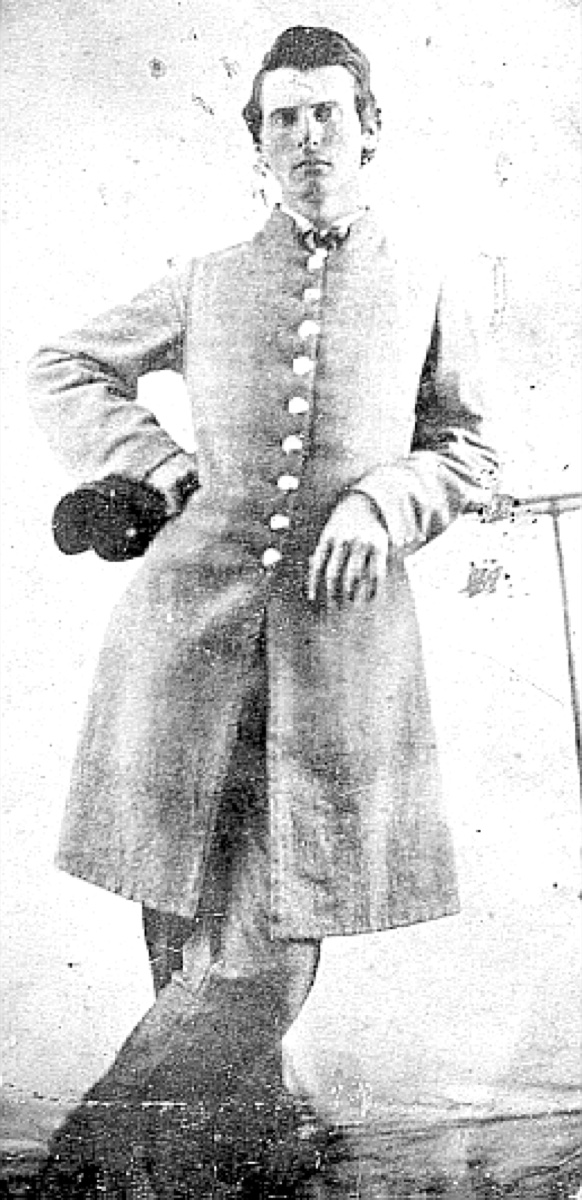
After the War
There is no evidence in Fauquier County of Josh Martin ever marrying. We know little about his post-war activities. In the 1870 U.S. census, he is living with his parents. In the 1880 U.S. census, with his parents dead, He and his sister Minnie are still living at the home farm. They have two boarders, Ann Whitehead, (27, single, boarder, teaching school, she and parents born in Tennessee) and Nathanial W. Pope, (57, single, friend, and teaching school.)[233] Margaret, Bob’s widow, has moved, but is living close by, at her brother William’s household with her nephew Earnest Lee Childs.[234]
One little sliver survives:[235]
How to Hunt Rabbits. George W. “Josh” Martin, one of several from the same family included in the Black horse Cavalry roster, settled down after the war on his farm at Casanova with his sister, Miss Minnie. He was a close friend of my grandfather, John Parkinson, Warrenton Rifles, who visited him frequently and often took me with him. They would let me go rabbit hunting with them, and it was from “Uncle Josh” that I learned that when you jumped a rabbit the thing to do was to stop and wait instead of following him because the rabbit would circle back to where he started. I heard many war reminiscences from both of them but they never mentioned the exploit that had made Martin so famous. My father’s account of it to me is substantiated in “Gray Ghosts and Rebel Raiders” by Virgil Carrington Jones.
When his mother died, with his brother Bob dead and his brother Dick ten- years removed to Missouri, Josh inherited the home farm. He lived there with his sister Minnie until his death.
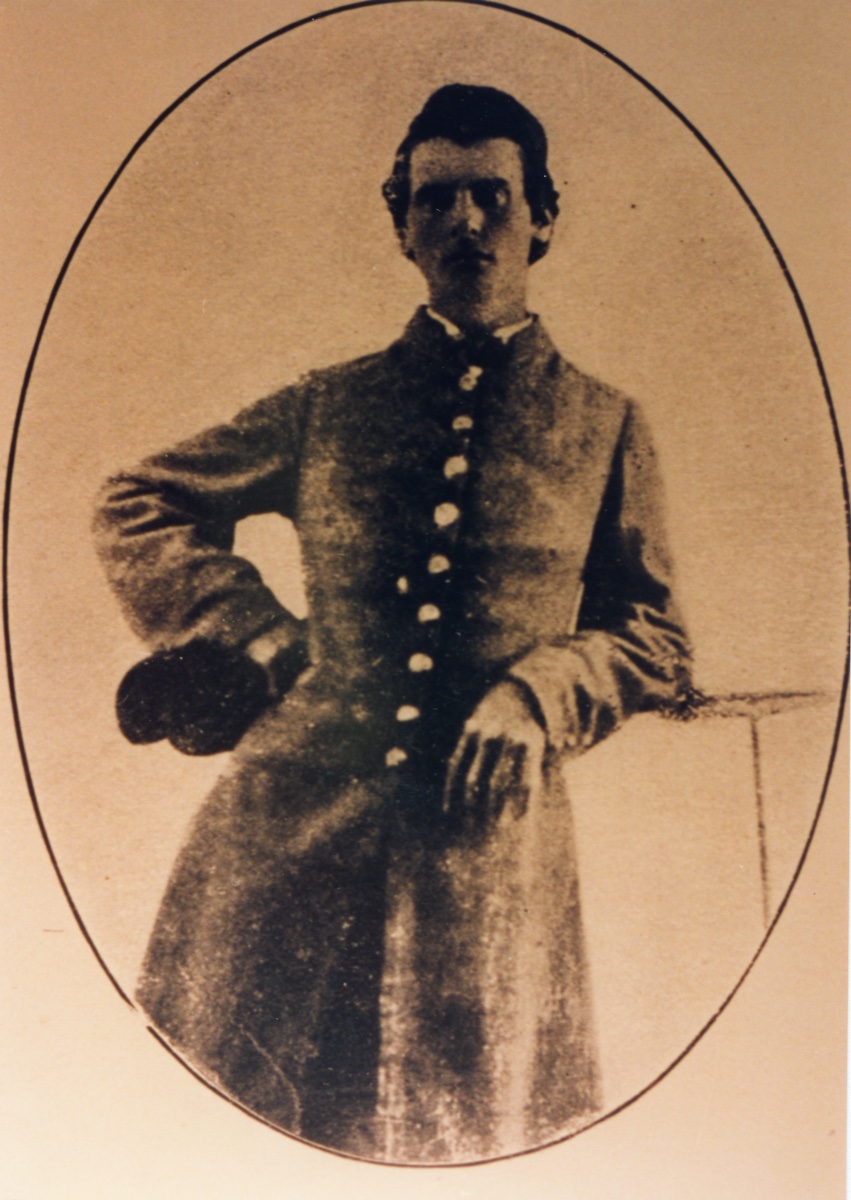
His Early Death
Thirty one years after the war, Josh Martin died 24 February 1896 at the early age of 52.[236] He is buried in the Martin Family Cemetery. His obituary in the Warrenton True Index newspaper read:[237] [238]
“Bravest of the Brave”. The Black Horse Camp mourns the loss of one of its most distinguished member, Geo. W. Martin. “Josh Martin” was no ordinary soldier. He was the junior of three brothers who served through the war as members of the Black Horse Company conspicuous for their bravery and fidelity to duty. The most famous of Napoleon’s old guard could not have exceeded them in gallantry and boldness when in action. Courage, truth and honesty was an inheritance from the best of fathers known to all of his associates as “HONEST John martin” and no man in any age more richly deserved that sobriquet. In the four years of war, “Josh Martin” was called on to discharge every duty of a soldier, and was never wanting, in the sabre charge, as a skirmisher, dismounted and fighting as infantry, courier at Head- quarters, or scout in the lines of the enemy, his good sense and intrepid nerve made him a marked man. It would be of doubtful taste, in this obituary notice, to attempt a recital of his many deeds of daring: but the writer has often seen him in times of danger bear himself as none could, except with undaunted courage and a thorough conviction that he as contending for a righteous cause. On one of his scouts he and two comrades met a like number of the enemy—one, a Lieutenant [Lieut. John R. Meigs, son of Union Quartermaster, Gen. Montgomery Meigs.] whom he thought, on demand, had surrendered, but the Lieut. fired, striking him just below the right nipple, the ball passing out on the left side of his back- bond. How any human could have stood such a shock is a mystery to one not versed in anatomy, but his extraordinary will-power enabled him to sit erect, return his assailant’s fire, killing him at once, and then rode eight or nine miles to get out of the lines of the enemy or where he could remain in comparative safety until his wound would permit his reaching and receiving the care of fond ones at home. Several of our Company were school-mates of that Union Lieutenant and deeply lamented his death; but it was the fate of war. In civil life the same traits of character which distinguished him as a soldier endeared him to all with whom he came in contact, which was evidenced by the large concourse of neighbors of all conditions, white and colored, male and female, young and old, at his funeral Wednesday, where one and all joined his grief-stricken sisters in sorrow for their loss. The floral offerings from his “Camp of Confederate Veterans” and individual friends, were many and beautiful—among them several large and tastefully arranged wreaths. The Captain who first led the Black Horse Company into the Confederate service and afterwards became the distinguished cavalry General W. H. Payne, brought as his offering a beautiful pillow of roses inscribed with colored violets “The bravest of the brave,” which tells how much such high authority appreciated our departed friend. Rev. Mr. Mead of the Episcopal church read its burial service. The Black Horse Camp acted as pall bearers, Comrades Chas. H. Gordon, Wm. L. Ficklin, W. A. Smoot, Jos. G. Hunton, T. M. Lomax, W. H. Lewis, B. P. Green and L. D. Beale were detailed as casket-bearers. These were immediately followed by about thirty veterans in the charge of Commander M. M. Green. At the head of the company was the old battle flag, furled and in mourning draped, borne by comrade Geo. C. Ransdall, who as one of the 4th Virginia Color Guard, had carried it in many a heard-fought battle. After placing the flowers on the grave and the completion of the burial service, his comrades and friends separated for their respective homes, with sorrowing hearts and deep sympathy with his distress relatives. Peace to his ashes. G.
His death was also noted in surrounding newspapers:[239]
Mr. George W. Martin, a member of the old Black Horse Cavalry, of Fauquier, died at his home of pneumonia last week. It was Mr. Martin’s brother, Bob Martin, to whom the gun sent over by an Englishman during the war was presented as being the bravest man in the cavalry. It was George who killed lieutenant Meiggs, son of General Meiggs, United States army, in a hand to-hand encounter during the war.
Dedication of Memorial to Josh
The women of Warrenton collected funds for a marker for Josh Martin’s grave. About a year and a half after his death, it was dedicated in the Martin Family Cemetery on 9 October 1897. Crowded around the grave were many of his old comrades and the ladies who raised the funds for the monument. The Warrenton True Index reported the ceremony in some detail:[240]
MONUMENT TO G. W. MARTIN. Pursuant to public notice the Black Horse Camp met at the grave of their late Comrade, Geo. W. Martin, on the 9th inst. to be present at the unveiling of a monument to his memory. Commander M. M. Green[241] called the camp to order, after which a most impressive prayer was offered by Rev. Mr. Mead. The prayer was followed by a brief address by Commander Green which is annexed: REMARKS BY COMMANDER GREEN. In recalling to memory our Comrade, he stands before me, not as the conspicuously gallant soldier, which he undoubtedly was, but as the man and friend. JOSH MARTIN was, in many respects, a remarkable and splendid character. He instinctively knew right from wrong and had the manliness to uphold what he thought right against all opposition. He disliked selfishness, cowardice and the fawning upon those advanced to high places as much as any man I ever knew. To those he regarded his friends, he was as gentle as a woman. Often in gloomy moments when recounting my many short-comings, I have been consoled by the thought that I could not be wholly bad and have retained through years of intimate association the unswerving friendship and confidence of JOSH MARTIN. In speaking for the Black Horse Camp, which regrets it inability to erect suitable monuments to all of its gallant dead and unwilling to do so for some and not for others just as worthy, to avoid invidious distinctions, has not contributed to the erection of any, returns its thanks to the individuals who suggested and pressed to a successful completion the tribute the unveiling of which assembles us to-day. The veil being removed comrade Alexander Hunter delivered the following address: ADDRESS BY COMRADE HUNTER. My friends and comrades of the Black Horse: We have met here to-day to dedicate this monolith to the memory of George W. Martin, whom you admired and esteemed in life, and sorrowed in his death. There are monuments in every city in the South to dignify her admirals, her generals and men of high renown. This is right and proper, bet we are here to honor one who wore a saber by his side, a carbine swung across his back, a private in the ranks, who curried his own horse and was always foremost in the advance, and the hindmost in the retreat. Those famous heroes of the South who have their last resting place marked by columns of bronze or shaft of marble may have been great in name and fame, but none of them excelled in courage, in truth, in fidelity, the private soldier who slumbers beneath this stone.
- “Enough of merit has each honored name,
To shine untarnished on the rolls of fame,
- And add new ilustre to the historic page.”
This simple shaft is not an eulogistic epitaph; his renown is graven deeper than if cut in marble or lettered in monumental brass, for his gallant exploits during the war, and his kindness and courtesy in peace are engraved on the tablets of our memory, and they will descend from father to son, and as long as this proud Commonwealth exists, and the boundaries of old Fauquier remain intact, so long will the name of private Josh Martin of the Black Horse Cavalry be a household word. For a score of years it has been my privilege to be his close and trusted friend, and I know that in every phase of life he as borne himself as Froissart’s Chronicle[242] has it, “ Like a knight of old, with heart of gold.” I have seen him in the dark, cold wintry bivouac, where the dread monotony and semi-starvation made the best among us dissatisfied, discontented, and almost hopeless, yet I never heard a murmur from his lips—he was always bright, ever cheerful in the darkest hours. I have seen him in the dashing charge, when, as Gen. Phil. Kearny said at Seven Pints, “Go anywhere Colonel, and you will find lovely fighting along the whole line” I have seen him in the advance dismounted, his eyes blazing with the flame of battle, and his voice rising above the rattling fire of carbines, cheering his comrades on; and I have seen him stop, and with a pitying tenderness give his canteen to a wounded enemy lying in his path; and this much can be said, that among the many prisoners he has captured on his scouting expeditions, he never ill-treated one by word or deed. We can say of his as of Shakespeare’s Claudio, “He hath borne himself beyond the promise of his age, doing in the temper of a lamb the feats of a lion. But better than this, I have witnessed his home life; and that after all is the true test of a man’s character. It is only people that possess firmness who can possess true gentleness; and Josh Martin was essentially gentle, kind and lovable. He was unselfish, and he possessed in a marked degree that first attribute of a gentleman ‘a conscientious consideration for others.’ He loved the Black Horsemen, and if every little act of kindness he has done us could have been marked by a stone and that stone cast on this spot, there would be a mound so massive, so broad and so high, that would rise toward Heaven like the pinnacled crag of the Blue Ridge. We returned his affection and so we gather here today to perform the last rites, and standing by his grave declare that nature never fashioned a braver, gentler, manlier man. We cannot give our loving tribute to our dead comrade without speaking of him from whom he inherited his many lovable qualities, for “like father, like son.” After all I question if the real heroes of the late war were not the great, brave, patient people; their mental agony was harder to bear than our physical pain, and watching, waiting and hoping with breaking hearts for the loved ones facing death was a trial to all, but to those families within the enemy’s lines, cut off from all communication with the outside world, as was Fauquier county, the experience filled the cup of their adversity to the brim. How well our old host John martin, his devoted wife and daughters bore the ordeal we all know. It was Theodore Parker who wrote, “The most useful man is the greatest.” Then judging by that standard John Martin was great indeed, for every hour of his life was jeweled with some good deed to his fellow man. But, it was to the Black Horse Cavalry that the tendrils of his heart clung so lovingly and tenaciously. In their successes he rejoiced, in their deaths he sorrowed as a father for his son. And to his eldest born, the daring fearless Robert, that the ideal type of a southern trooper, the pride of old Fauquier in the days agone, he too has left a name that is immortal. And now my comrades of the Black Horse, survivors of many a hard fought field, the years have rolled on, and age has whitened our locks and bowed our forms, our faces are turned towards the setting son and we have borne well our part in the days when the greatest bloodiest war the world ever saw rocked this continent from centre to circumference, and after, in the last words of the immortal Jackson, we shall “Cross the river and rest under the shade of the trees.” If friends, relatives and comrades can stand over our last resting place and say about our dead comrade “There rests a man;” then indeed we shall not have lived in vain The ladies of the neighborhood then advanced and strewed the grave with flowers RESOLUTIONS OF CONDOLENCE. On motion the following resolutions were unanimously passed and signed by every comrade present and ordered to be transmitted to Gen. Wm. H. Payne. Whereas the veteran survivors of the Black Horse Cavalry having this day assembled to honor the memory of one of our comrades, learn with unfeigned sorrow and regret that our Comrade and Commander [Gen. Wm. H. Payne] is absent because of the loss of his cherished and beloved daughter,[243] therefore. Be it Resolved, That we, his comrades in arms, tender him our heart- felt sympathy in his bereavement, and from our hearts we desire to him, in this our of anguish and sorrow, our hope that though death has claimed its fairest flower, yet may the memory of the devoted love she bore him in life be his stay and comfort.
|Geo. C |Wm. L. | |Ransdell, |Ficklin, | |Boliver Ward, |T. A. Fant, | |Alex Hunter, |James Vass, | |M. M. Green, |T. Ritchie | | |Green, | |R. C. |W. A. Caynor, | |Florance, | | |W. H. Lewis |J. E. | | |Armstrong, | |G. C. |L. D. Beale, | |Florance, | | |R. A. Hart, |C. E. | | |Holtzclaw, | |S. S. Jones, |Jno. R. | | |Turner, | |F. R. Duke, |J. G. Hunton, | |G. W. Clark, |S. M. G. | | |Beale, | |Jno. G. Beale,|Wm. A. Bowen, | |Hugh Hamilton |Dan’l J. | | |Payne, | |T. N. Lomax, |T. C. Pilcher,| |J. T. Riley. | |
A handsome marble monument was erected. The first four lines read:[244]
The most famous of the Black Horsemen The lamb of the household The lion in battle He looked the foe in the face
With his brother Bob long dead, and his brother Dick long removed to Missouri, it was Josh who became the symbol in Fauquier of the achievements and fame of the three Martin brothers. Josh’s twenty-six years survival of his brother Bob eclipsed the memory of the “bravest” and, at Josh’s death, it was he who was hailed as “the most famous” of the Black horsemen.
But, in a bitter-sweet last line on Josh’s tombstone, Fauquier remembered all three brothers:
The Martin boys the pride of old Fauquier
Part II
Their Family